
Choosing the best cat litter is essential for any cat owner who wants to provide a clean and comfortable environment for their feline friend, whether in terms of odor control, ease of cleaning, or suitability for the cat's temperament. With a wide variety of options, from clay and plant-based litter to silica sand and other eco-friendly alternatives, finding the right type becomes a task that requires understanding the differences between each. In this comprehensive guide, we'll explore the most important types of litter, how to choose an affordable and effective cat litter, and tips for selecting the most suitable litter box and litter tray based on your cat's size and behavior. This will help you create a healthy and ideal space that provides your cat with daily comfort and makes caring for them easier.
What is the best cat litter? - The basic types and the advantages of each.
Clay sand (bentonite)
Brief definition
Clay sand is manufactured primarily from bentonite clay, and is the most common and abundant in the markets.
Key advantages
It clumps up quickly upon contact with urine, making it easy to remove the clumps with a scoop and reducing litter consumption; its price is usually economical, making it a "cheap cat litter" option for a wide range of breeders.
Major drawbacks
It produces dust that may irritate the respiratory system of some cats or allergy sufferers, and it is also heavy and increases the likelihood of particles scattering outside the box.
Who is clay sand suitable for?
A parent looking for an economical and easy-to-clean solution for one or more household children, but will need a Litterbox or Littermat to reduce the spread of granules (product example: Dream Kitty Bentonite Sand 10L — Bird VII ).
crystalline silica sand
How it works
Porous crystalline granules that absorb fluids into their pores instead of clumping together; some types change color as they absorb urine, making it easier to know when the change occurs.
Advantages
Superior moisture absorption and strong odor control with low dust, making it suitable for homes with respiratory allergies; relatively lightweight and easy to transport.
Disadvantages
The texture of the granules may not be preferred by some cats, the initial cost is higher than clay sand, and it does not clump in the same way as traditional clumping sand.
Preferred use cases
Homes that need long-term odor control and cannot change the litter daily, or cat owners who are sensitive to dusty soil (product example: Crystal Cat Litter 4.15kg — Bird VII ).
Tofu sand (plant sand)
the components
Granules made primarily from soybean residue (tofu) with vegetable starch sometimes added to improve clumping and absorption.
Advantages
Biodegradable and environmentally friendly, flushable down the toilet in small quantities, low dust and relatively safe if small amounts are swallowed; clumps up quickly and reduces particle tracking.
Disadvantages
It is expensive compared to clay sand, requires dry storage because moisture reduces its effectiveness, and its performance may be affected in high-humidity environments.
The best categories that suit it
Owners of small or respiratoryly sensitive cats, and breeders who prefer eco-friendly solutions and want a washable option (example product: 6L Vegetarian Tofu Litter — Seventh Bird ).
cassava sand
Definition
Vegetable sand made from cassava root starch (manioc/yucca) is converted into granules or pellets and used as a natural alternative to clay sand.
Advantages
Biodegradable and environmentally friendly, it clumps up quickly and forms solid blocks, produces little dust and gives good odor control without strong synthetic perfumes, and it is also lighter than clay sand.
Disadvantages
It is usually more expensive than clay sand and may not be readily available in all stores; it requires dry storage to maintain its quality.
A brief comparison with tofu (without repeating information)
Both are plant-based and washable, but cassava is based on natural root starch that gives a solid clump with excellent ammonia-locking performance, while tofu is softer for the hoof and slightly more safe to swallow; your choice between them depends on the cat's preference (texture) and the availability and price of the product in the market (example product: High Clumping Cassava Litter 6L — Bird Seven ).
Wood pellet litre
Definition
Plant-based sand made from compressed wood shavings (often pine or natural wood without artificial fragrances). It turns into a powder upon absorbing liquids.
Advantages
Completely environmentally friendly, easily biodegradable, economical because it lasts a long time, and controls odors thanks to the natural oils in the wood. It produces virtually no dust.
Disadvantages
It does not clump, which means it needs a different cleaning method based on sifting; some cats may not prefer the texture of large granules.
Who is it suitable for?
Households looking for a low-cost, long-term, natural option, especially if the cat is sensitive to dust or artificial odors.
Read also: The best small dog breeds: A comprehensive guide to choosing the right breed for you
Corn sand (Corn Litter)
Definition
Plant-based sand made from processed and compressed corn kernels that become clumped granules.
Advantages
It clumps up perfectly and quickly, is fully biodegradable, lightweight, low dust, and has a natural and acceptable scent without strong synthetic perfumes.
Disadvantages
It is more expensive than clay sand, and may attract some insects if it is not stored properly in hot regions.
Who is it suitable for?
Breeders who want a plant-based alternative that has a strong clump and is washable in small quantities.
Recycled paper sand (Paper Litter)
Definition
Granules made from compressed recycled paper, used for medically sensitive cats.
Advantages
The lightest type, extremely soft on paws, completely dust-free, and an excellent choice for cats after surgery or those suffering from foot infections.
Disadvantages
It does not clump, and may need frequent changing as it absorbs liquids without clumping; odor control is moderate.
Who is it suitable for?
Homes that have cats that are sick or very small, or that require a completely dust-free environment.
Read also: The best ways to care for cats: Your comprehensive guide to keeping your cat healthy
How to choose the right cat litter? Factors to consider
Cat allergies and fur type
Dust effect
Some cats, especially long-furred ones or those with respiratory allergies, can be affected by even small amounts of dust that can be released when cleaning the litter box. Long fur easily traps dust, causing it to stick to the body and spread throughout the area.
What types are suitable for sensitive cats?
The best litter for sensitive cats is low-dust litter such as silica, tofu, cassava, and paper litter. These are ideal choices, especially in cases where the cat has respiratory problems or eye inflammation. It is preferable to choose fine, unscented, and slightly clumped litter so as not to cause additional irritation.
Odor control
What makes one type of sand dominate the smells?
True odor control depends on three elements:
- Effective absorption of liquids to prevent ammonia fermentation.
- The scent is trapped inside the granules , as happens in silica, tofu, and cassava.
- Good ventilation of the sandbox and adjusting the sand level to prevent urine from reaching the bottom of the box.
The difference between neutralization and concealment:
- Neutralization: This means treating odors and breaking down their molecules (such as plant sand or silica).
- Masking: This means covering up the odor with artificial perfume without addressing the underlying cause. This option might work well for small homes, but it's not suitable for all cats, especially those with sensitive respiratory or emotional needs.
Easy to clean
Clumped versus non-clumped:
- The clumping action forms solid balls upon contact with urine, facilitating faster elimination and reducing sediment consumption. Ideal for quick daily routines.
- Non-clumping: Absorbs liquids without forming clumps and requires frequent partial or complete emptying. Suitable for breeders using double-sieve litter boxes or cats that require very soft options like paper litter.
How does this affect the daily routine?
If you work long hours and want faster maintenance, clumping litter is more convenient. However, if your cat is recovering from surgery or requires special care, non-clumping litter may be a safer option, although it does require more weekly effort.
Budget – How to choose cheap and effective cat litter?
Comparison of budgets:
- Low-cost: Economical, non-clumping or clumping clay litter. Suitable for owners with more than one cat and who change the litter regularly.
- Medium: Tofu and economical cassava or regular silica. Offers a balance between performance and cost.
- High-quality: Premium tofu, high-quality cassava, or expanded silica. Provides greater comfort and reduces sand replacement in the long run.
Examples of an economic scenario:
A cat owner who uses clumping clay litter with a full weekly change may spend more in the long run than someone using average-quality tofu litter that lasts 2–3 weeks. Therefore, choosing inexpensive cat litter doesn't always mean the cheapest option at the time of purchase, but rather the least expensive over the course of a month, based on the cat's usage and cleaning frequency.
Read also: The best types of parrots with a comprehensive comparison between the most popular breeds
Types of cat litter boxes and sandboxes best suited for your home
Choosing the right litter box is directly related to the type of litter you use; some of the best types of litter for cats, such as silica or tofu, work more efficiently inside closed boxes, while clumped clay litter needs good ventilation in spacious boxes.
open sandbox
Advantages:
It provides excellent ventilation, helping the litter dry quickly and reducing odor buildup, while also making the cat feel secure as it has a full view of its surroundings. It is easy to clean and has no complicated parts.
Disadvantages:
It may allow odors to evaporate in small spaces, and granules to spread outside the box, especially with light-colored litter. It also offers less privacy for shy cats.
Who is it suitable for?
For homes with ample space or that use fast-drying clumping litter. Ideal for cats that dislike enclosed spaces or are accustomed to traditional litter boxes.
Shop now: Open litter box for cats with a raised edge design
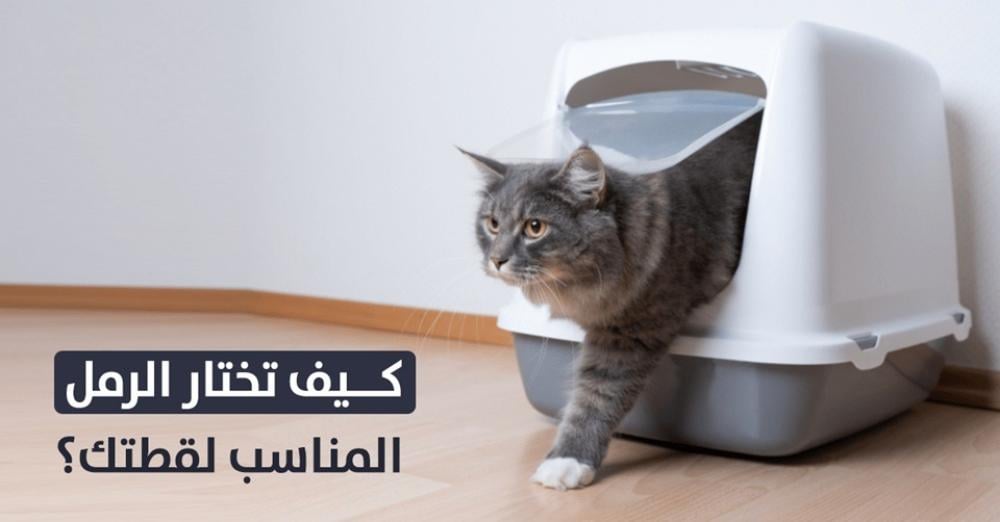
enclosed sandbox
Privacy:
It provides a great sense of security and tranquility for cats who prefer solitude while relieving themselves, and gives a more tidy appearance inside the house.
Odor control:
It reduces the spread of odors in the area, especially when using plant-based sand or silica, which absorbs liquids quickly. The front door also helps contain odors and dust inside the box.
Restrictions:
Some cats may refuse to enter a closed litter box if they have odor allergies or dislike confined spaces. Regular cleaning is necessary to prevent moisture buildup inside.
Shop now: A litter box and a home in one for cats
Sandbox with top entrance
features:
This is one of the best options for reducing litter scattering, especially when using lightweight litter such as tofu or corn. The top design allows the granules to fall off the cat's paws as it leaves, significantly reducing tracking.
Situations where it may not be suitable:
Not suitable for very young, elderly, or joint-related cats; the top entrance requires jumping ability. Also unsuitable for cats afraid of heights or who prefer a side entrance.
Automatic (self-cleaning) litter box
How it works:
It relies on sensors that check when the cat leaves, then the box automatically begins removing clumps or separating waste from clean sand inside a closed chamber.
Daily benefit:
It saves the breeder a lot of time and keeps the box clean all day, greatly reducing odors and making it convenient to use, especially for busy or multi-cat households.
Usage requirements:
It needs high-quality clumping litter to function efficiently, a suitable space for electrical connections, and the interior should be cleaned weekly. The cat should also be gradually accustomed to it if it is shy or sensitive to changes.
Read also: Milk for kittens and babies: Safe alternatives and feeding schedules for healthy growth
What types of litter box air fresheners are there and how do they work?
Litter box deodorizers help improve the litter box environment without needing to change the type of litter used. They are complementary solutions to using high-quality cat litter, not replacements for it. These products work by absorbing, breaking down, or masking odors, and their effectiveness varies depending on the type of litter box, the number of cats, and the cleaning routine.
Neutralizing powders (such as baking soda)
Her role:
It is used to reduce odors caused by urine or feces by balancing the acidity inside the box, and is one of the simplest and safest solutions when used in moderation.
How does it work chemically, in simple terms?
It relies on the property of chemical neutralization; baking soda is an alkaline substance that neutralizes acids and ammonia compounds responsible for the smell, thus reducing their strength rather than just masking them.
activated charcoal
Absorption mechanism:
Activated charcoal has thousands of tiny pores that make its surface highly absorbent, trapping odor molecules inside these pores instead of allowing them to react with the air.
When is it the best option?
This is ideal when space is limited, there are multiple cats, or when using a closed litter box that requires extra odor control. It's also an excellent option for cats that cannot tolerate synthetic fragrances.
commercial scented powders
The nature of perfumes:
It relies on light scents specifically designed for pets, such as botanical or light aquatic scents, and works to add a fresh layer to the box without being overpowering.
How to use it correctly?
Spray only a small amount on the bottom of the litter box before adding the litter, and another light layer can be added during weekly turning. Too much fragrance may cause the cat to refuse to enter the box, so start with a small amount and observe the reaction.
Added crystals
Its role in enhancing absorption:
They come in the form of small granules that are similar to silica in terms of absorption, but they are added in small quantities on top of the sand to help draw moisture from the lower layers, preventing odors from forming quickly.
The differences between it and silica sand:
The crystals are not a replacement for sand, but rather a complement to it. While silica sand acts as the primary absorption medium, these crystals serve only as enhancers to improve the performance of any type of sand used, without replacing it.
Sprays and bio-enzymes
The role of enzymes:
It relies on natural enzymes that break down odor-causing organic molecules, such as proteins and ammonia compounds, thus eliminating the odor at its source instead of masking it.
When is it used?
It's an excellent choice when cleaning the entire litter box or when dealing with stubborn odors that traditional cleaning powders can't handle. It can also be used to clean the areas around the box or the floor if the cat has been following its droppings.
In conclusion
Now that we've learned about the best cat litter and its different types, how to choose the right litter based on your cat's allergies, cleaning routine, and budget, and the different types of litter boxes and litter box deodorizers, you're able to create a perfect and healthy space for your cat and choose the most suitable option without confusion or trying unsuitable products. Choosing the right litter is a step that makes a real difference in home cleanliness, your cat's comfort, and the ease of daily care.
If you are looking for high-quality products such as sand, litter boxes and air fresheners, you can try the advanced options available at Seventh Bird .
Try Seventh Bird products now and enjoy the best pet care products.
Frequently asked questions:
How often should the litter box be cleaned?
Daily cleaning should include removing clumped litter and feces at least twice a day. Cats are very clean creatures and may refuse to use a dirty litter box.
How often should the sand be completely changed?
For clay/clumping litter: Discard the old litter, wash and dry the litter box thoroughly, and then refill it with fresh litter every two to four weeks. For silica litter: May last three to four weeks for one cat.
How do I clean the box?
Use warm water and a mild soap or enzyme cleaner. Avoid harsh cleaners such as ammonia or bleach (chlorine), as their smell may repel the cat or cause irritation.
Can cat litter be disposed of in the toilet?
Only use sand specifically designed for flushing down the toilet (such as tofu sand, cassava sand, and some types of wood sand), and in small quantities to avoid clogging the drain. Never flush clay sand or silica sand down the toilet.
Why does my cat urinate outside the box?
Health problem: Urinary tract or kidney infection (requires immediate medical attention).
Environmental/behavioral problem: The box is dirty, the sand is unsuitable, there is an unpleasant smell, or there is a feeling of stress.
Do cats prefer an open or closed box?
Cats generally prefer an open box. This allows for better ventilation, reduces the buildup of odors inside, and makes the cat feel safer.
How do I get my cat to use a new type of litter?
Gradual change: Mix small amounts of new sand with old sand for a week or two. Gradually increase the proportion of new sand until all the sand is the new type.
Why does my cat dig so much?
This is a natural, instinctive behavior to bury waste and conceal its smell from predators. Sufficiently deep sand (7 cm) should be provided to satisfy this instinct.